
How to Use a Jacuzzi: Complete Beginner’s Guide to Safe, Relaxing and Effective Jacuzzi Use
The first time I set up a home jacuzzi for a client in Gulshan, Dhaka, he asked me one simple question.
“It is in. Now how do I use it the right way?”
It sounds easy. But there is a right way and a wrong way. The right way feels great. It leaves you relaxed, fresh, and well. The wrong way wrong heat, too long, no water can make you dizzy or sick.
Over the years, I have worked with home owners, hotel spa teams, and gym owners all over Bangladesh. I have seen both sides. This guide is what I wish every new jacuzzi owner could read on day one.
We will cover what a jacuzzi is and how it works. We will go through each step of how to use it. We will talk about heat, time, safety, and care. By the end, you will know how to get the best from every single session.
Let us start from the top.
What Is a Jacuzzi?
A jacuzzi is a brand name. It has become the common word for a hot tub or bath with jets. It is a tub filled with warm water. Jets in the walls push out streams of water and air. These jets press against your body. They feel like a massage.
The water heat is set by you. The jets can be changed. The mix of warm water, float, and jets is called hydrotherapy.
The Cleveland Clinic defines hydrotherapy as any way water is used to help your body feel better. A jacuzzi is one of the best ways to enjoy that at home.
Difference Between a Jacuzzi, Hot Tub, Whirlpool Bath, and Spa
These four names are used in much the same way. But there are small gaps.
Jacuzzi is a brand name like Thermos or Velcro. The Jacuzzi brand made the first home whirlpool bath in the 1960s. Now most people use the word jacuzzi to mean any hot tub or jet bath.
A hot tub is any large tub filled with warm water. Most have jets. Some do not.
A whirlpool bath is a small unit built into a bathroom. It fits one or two people. Jets move water around the body.
A spa is the biggest term. It can mean a full wellness space, a swim spa, or a hot tub. Many use the words spa and hot tub to mean the same thing.
In this guide, we use jacuzzi to mean any jet tub with warm water and heat control.
Main Components of a Jacuzzi
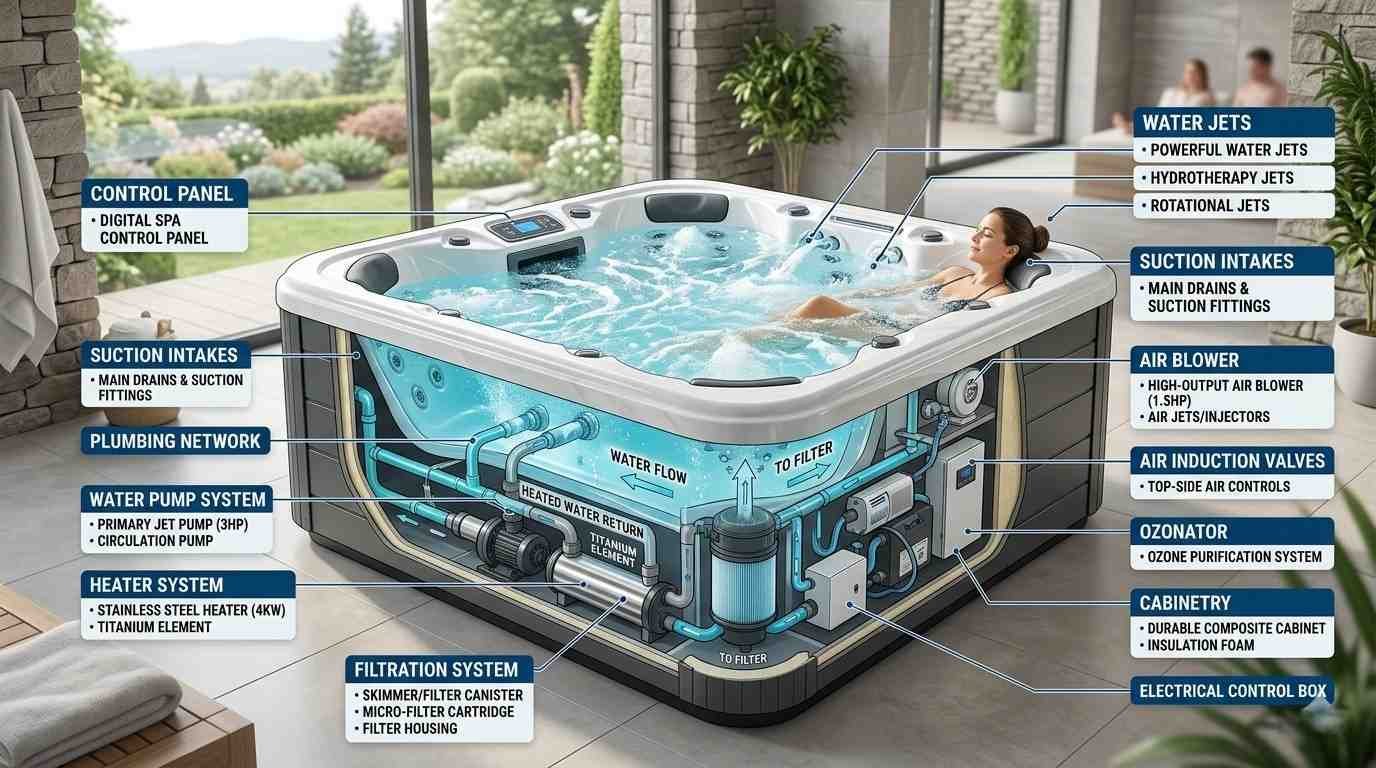
Each part plays a role. Knowing them helps you use and care for your jacuzzi well.
Water jets: These are the nozzles in the walls and seats. They push warm water and air onto your muscles. Each jet targets a body zone back, neck, legs, and feet.
Pump system: The pump moves water to the jets. More pump power means more jet force. A strong pump gives a deep massage feel.
Heater: The heater keeps the water at the heat you set. Most do this on their own. Good models use less power to keep the heat steady.
Filter system: This cleans the water. It pulls out dirt, oil, and dust. Clean filters mean clean, safe water. They need care and swap-outs over time.
Control panel: This is where you set heat, jet speed, and time. New jacuzzis have touch screens, remote pads, and phone apps.
Air blower: This pushes air through small holes in the floor or walls. It makes soft bubbles. These add to the calm, soft feel.
Benefits of Using a Jacuzzi Before You Get Started
Before you step in for the first time, it helps to know why a jacuzzi is so good for your body. The gains are real. They are backed by new 2024 and 2025 studies.
Muscle Relaxation
Warm water makes blood vessels open wide. Blood moves fast to your muscles. Jets press on tight spots. This breaks down knots and stiff areas.
Studies shared by the Jacuzzi wellness team show that warm jet massages cut muscle pain, swelling, and heal time. A 2025 study from All Seasons Pools and Spas found that water therapy boosts blood flow to muscles by 15 to 55 percent. The heat level changes how much.
Stress Reduction
A jacuzzi session cuts cortisol. Cortisol is the main stress chemical in your body. At the same time, it boosts serotonin and dopamine. These are the feel-good chemicals in your brain.
Research from the University of Maryland Medical Center shows warm water therapy cuts cortisol and raises serotonin and dopamine. The calm feeling this creates lasts long after you step out.
A study from the University of Freiburg found that people who soaked in warm water often had more drop in sad feelings than those who only worked out.
Improved Blood Circulation
Warm water opens up your blood vessels. Your heart works with ease. Blood carries more oxygen to each part of your body, faster.
A 2024 study in PLOS ONE found that warm baths at night were strongly tied to lower blood pressure in adults. Healthline’s October 2024 review also links hot tub use to better blood pressure. WhatSpa’s 2026 guide notes that warm water takes about 90 percent of your body weight off your joints. This helps your blood flow too.
Better Sleep Quality
A jacuzzi before bed helps you fall asleep fast and sleep deep.
Healthline’s October 2024 review says water therapy boosts histamine and serotonin. Both help your body sleep. A 2023 review of many studies found water therapy raised scores on the Pittsburgh Sleep Quality Index. This is a key test for sleep health. Jacuzzi’s own research says 20 minutes in a hot tub before bed gets your body ready for deep sleep.
Recovery After Exercise
After a hard workout, your muscles are sore and swollen. Heat helps. Jets help more.
The Reset Mind Body guide from 2025 confirms hot tubs cut muscle pain, ease joint hurt, and speed up healing. Equinox’s 2024 guide adds that warm water works better at cutting muscle pain than dry heat.
Luxury Wellness Experience
Beyond the health gains, a jacuzzi just feels great. It is a calm, private space. No screens. No noise. No stress. In busy Bangladesh cities like Dhaka, Chittagong, and Sylhet, that kind of peace is worth a lot.
How to Use a Jacuzzi Properly (Step-by-Step Guide)
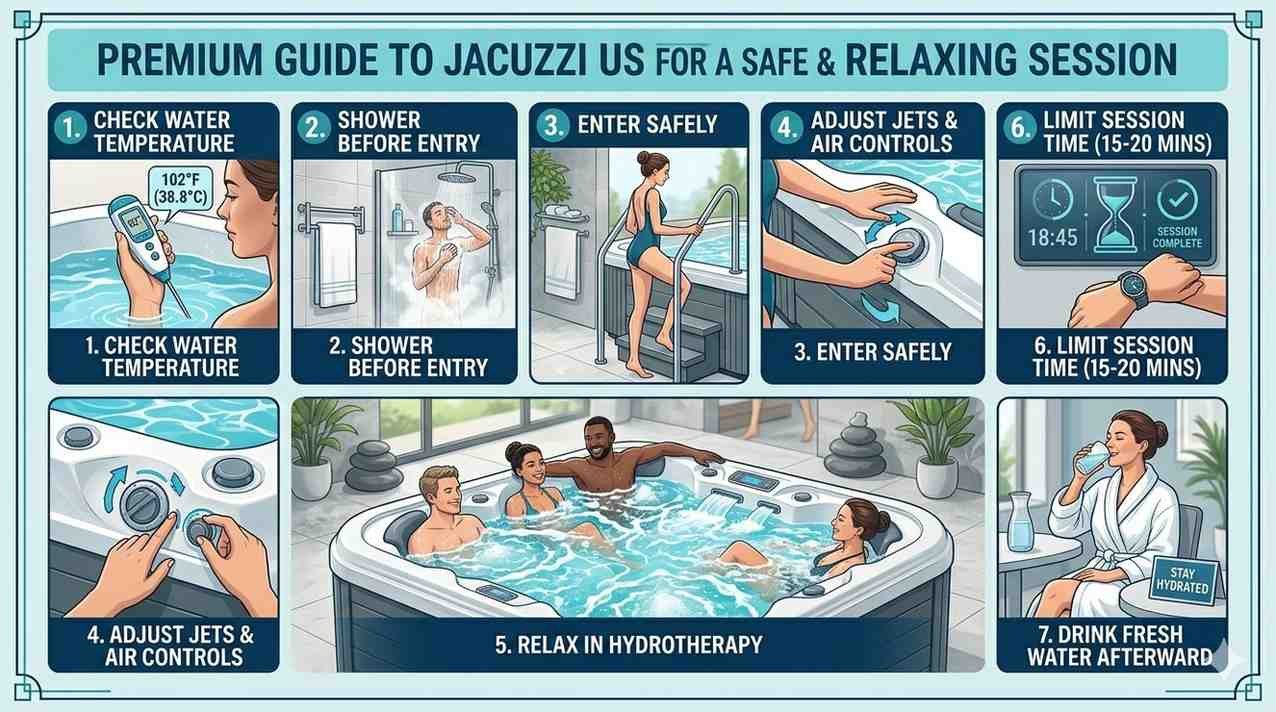
This is the key part. Follow these seven steps each time you use your jacuzzi for the best results.
Step 1: Check Water Temperature
Do this first. The right heat range for most adults is 37°C to 40°C. That is 98°F to 104°F.
If you are new, start at 37°C. Your body needs time to get used to warm water. Too hot too soon can make you feel dizzy.
For regular users, 38°C to 40°C works well. Do not go past 40°C. Hotter is not better. It just adds stress to your heart and dries you out.
Tip for Bangladesh: In the cool months of November to February, 39°C to 40°C feels great. In the hot months, 37°C to 38°C is warm enough.
Step 2: Shower Before Entering
Always shower first. This is a must for health and for your water.
Your skin holds sweat, sun cream, lotion, hair spray, and daily dirt. If you skip the shower, all of it goes into the water. It clogs your filter. It throws off the water balance. It helps bad bacteria grow.
A quick warm rinse cleans your skin. It also warms your body before you get in. This makes the move into hot water smoother and nicer.
Step 3: Enter the Jacuzzi Slowly
Never jump into a hot jacuzzi. Go in slow, one step at a time.
Hot water makes your blood vessels open fast. If you rush, you may feel dizzy. A slow entry gives your body time to adjust.
Always use the handrail or step handles. The floor near a jacuzzi is wet. It is easy to slip. Take your time going in and coming out.
Step 4: Choose Your Preferred Jet Settings
Once you are in, use the panel to pick your jet speed. Most jacuzzis have low, medium, and high settings.
Start on low or medium. Get used to the push before going to high. Strong jets can hurt on soft spots if your body is not ready.
Sit so the jets press where you need them most. For your back, sit up and press your spine to the rear wall. For your neck, lean back a little. For your legs, stretch them toward the front nozzles.
Try each spot in your jacuzzi. Most models have jets set for the lower back, neck, shoulders, calves, and feet.
Step 5: Relax and Enjoy the Hydrotherapy
Now the best part just relax.
Breathe slow and deep. Let the warm water work. You do not need to do a thing. The heat, float, and jets are already helping your muscles, blood, and stress levels.
To make it even better, close your eyes. Play soft music. Or add a few drops of scent oil to the water. Check your model’s guide first some have ports just for this.
Good seat spots for each goal:
For lower back pain sit tall with your back to the rear jets.
For neck and shoulder stress lean back so the jets press your upper back and neck.
For sore legs and calves stretch your legs to the front jets. Slowly flex and relax your feet.
For full calm find the most natural lean. Let your whole body float and rest.
Step 6: Limit Your Session Time
This step matters a lot. Most new users get it wrong.
If you are new, stop at 15 to 20 minutes. Your body is not used to long heat soaks yet. More time raises your risk of dry-out, dizziness, and too much heat.
For regular users, 20 to 30 minutes is a good target. Some keen users go to 45 minutes. But only with good water intake and cooler heat.
Do not fall asleep in the jacuzzi. Warm water and calm jets can make you drowsy fast. This is not safe. Set a timer before you get in. Always.
Step 7: Exit Carefully and Rehydrate
When time is up, come out slowly. Use the handrail. Do not rush to stand up. Your blood pressure may be a bit low after heat. Standing up too fast can make your head spin for a moment.
After you step out, cool down for 5 to 10 minutes before you shower. A cool or lukewarm rinse washes off any water chemicals and brings your body heat back to normal.
Most of all drink water. Drink one to two big glasses as soon as you can. You have been sweating in warm water. You may not feel it, but your body lost fluid. If you skip this step, you may get a headache or feel tired later.
Ideal Jacuzzi Temperature for Different Users
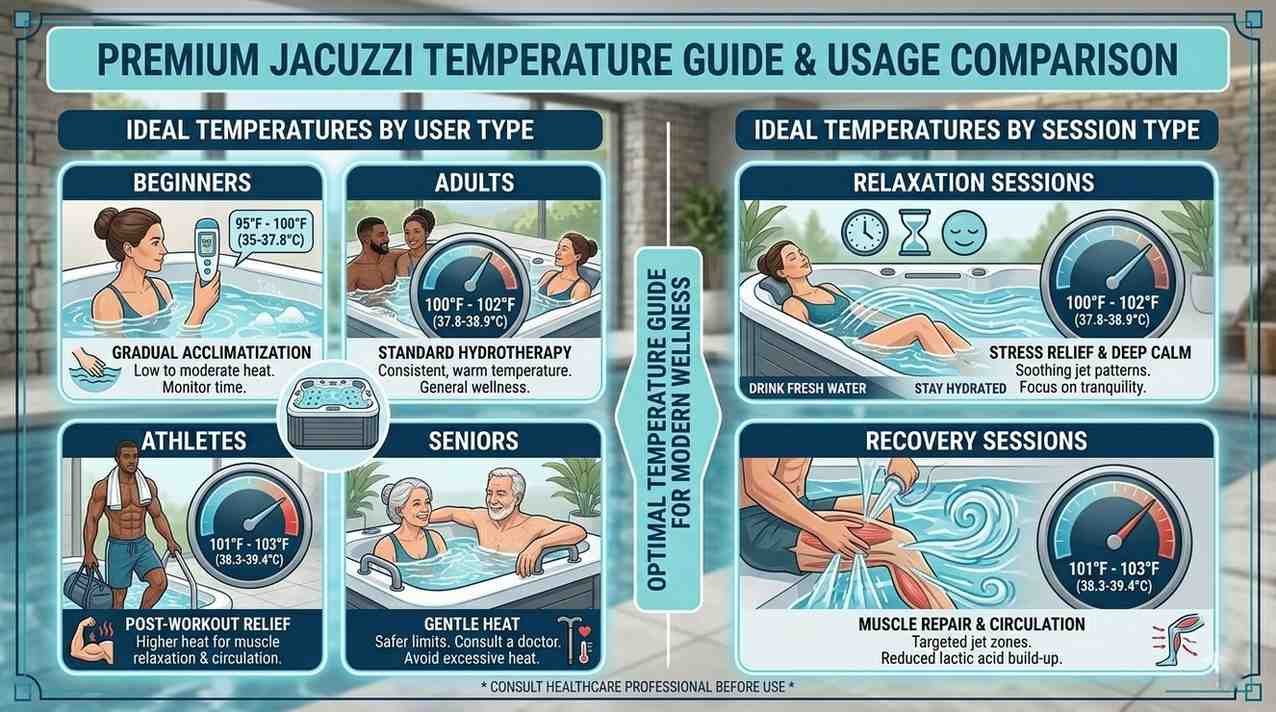
Different people and goals need different heat settings.
Beginners
Start at 37°C. Give your body a few sessions to get used to the heat. A gentler start makes the first few times feel good, not hard.
Adults
The sweet spot for most healthy adults is 38°C to 39°C. This is warm enough to relax your muscles and start the full water therapy effect without straining your heart.
Athletes
For post-workout care, 38°C to 40°C works well. This heat opens blood vessels, flushes lactic acid from muscles, and cuts soreness. Some athletes like 38°C with high jet force for a deep press effect.
Seniors
Seniors should stay at 37°C to 38°C. Older bodies are more sensitive to heat. Their hearts react more strongly to heat changes. Cooler heat with short sessions of 10 to 15 minutes is the safest path. Always ask a doctor if there are any heart or blood pressure concerns.
Relaxation vs Recovery Sessions
For pure calm and stress relief 37°C to 38°C with low to medium jet force. The aim is to slow the mind and rest the body.
For muscle care after a workout 39°C to 40°C with medium to high jet force. The aim is to boost blood flow, cut swelling, and help muscles heal.
How Long Should You Stay in a Jacuzzi?
This is one of the most asked questions especially from new users.
First-Time Users
Cap your first session at 15 minutes. Your body is still getting used to the heat and jets. Fifteen minutes is enough to feel the full good effect without pushing too hard.
Regular Users
With use two to four times a week, most people move up to 20 to 30 minutes with ease. Some who use it often enjoy 45-minute sessions. But always drink enough water.
Factors That Affect Session Duration
Heat level hotter water means a shorter safe session.
Your health right now illness, tiredness, or some medicines can lower how well you handle heat.
How much water you drank if you are already low on fluid when you get in, cut the session short.
Time of day evening sessions before bed can run a bit longer as you are not going back to hard tasks.
Warning Signs You Should Leave Immediately
Know these signs. They mean your body needs out right now.
You feel dizzy. Your skin burns or itches. You feel sick. Your heart beats too fast. You feel short of breath. You start to feel confused or very tired.
If any of these hit, get out slowly, sit down, drink water, and rest. Do not get back in that day.
Best Time to Use a Jacuzzi
Morning Jacuzzi Sessions
A morning session wakes you up. Warm water and jets get your blood moving and loosen stiff muscles from sleep. Keep it short in the morning 15 to 20 minutes. Use a slightly cooler heat, around 37°C, so you do not start the day too drowsy.
After Exercise
Post-workout is one of the best times to use your jacuzzi. Wait 20 to 30 minutes after hard exercise before getting in. Let your heart rate drop. Then a 20-minute soak flushes lactic acid, cuts pain, and starts the muscle repair.
The 2025 hydrotherapy guide from All Seasons Pools and Spas confirms hot tub use after a workout gives real, proven gains for muscle healing, less pain, and better joint function.
Evening Relaxation
Evening is the most loved time to use a jacuzzi. Work stress, body tension, and mental drain all ease well with warm water. Thirty minutes at 38°C to 39°C is the perfect way to reset after a long day.
Before Bedtime
Using your jacuzzi 60 to 90 minutes before bed is one of the best ways to sleep better. Jacuzzi’s health research backs this timing. When you step out, your body heat drops. That drop tells your brain it is time to sleep. The result is less time lying awake and deeper sleep all night.
Jacuzzi Etiquette and Safety Rules
Whether at home or in a hotel, these rules matter.
Personal Hygiene Guidelines
Always shower before getting in. Remove all makeup, lotion, and hair products. Do not shave in the jacuzzi it puts skin cells and bacteria in the water. Tie long hair up or use a swim cap in shared jacuzzis.
Safe Water Practices
Keep a water bottle nearby. Drink before, during long sessions, and after. Never drink alcohol before or in a jacuzzi session. Alcohol and heat together raise the risk of dry-out and heart stress by a lot.
Proper Jacuzzi Behavior in Hotels and Resorts
In shared jacuzzis at hotels or wellness spaces in Dhaka or Cox’s Bazar, keep your voice low. Do not bring food or glass drinks in. Respect the time limits on the wall, especially if others are waiting. Always shower first most good places make this a rule.
Safety Rules for Families
Children under 12 should not use a full-heat adult jacuzzi. Their bodies heat up much faster than adults. If kids are present, lower the heat to 35°C to 36°C. Keep their sessions under 10 minutes. Never leave children alone near or in a jacuzzi.
Preventing Slips and Falls
The area near a jacuzzi is always wet. Put non-slip mats on all exit points. Always hold the handrail going in and out. Wear rubber flip-flops in shared spaces. Wet tile floors are a top cause of spa-related falls.
Common Mistakes People Make When Using a Jacuzzi
Knowing these mistakes saves you from pain and from costly repairs.
Staying Too Long
This is the most common error. New users feel so good they lose track of time. But more than 30 to 45 minutes in hot water raises the risk of dry-out, heat illness, and low blood pressure. Set a timer. Every single time.
Using Water That Is Too Hot
Hotter does not mean more relaxing. Water above 40°C puts real stress on your heart. It makes your heart beat faster and raises the risk of fainting especially for seniors or those with heart problems. Stay in the safe range.
Ignoring Hydration
You sweat in a jacuzzi even though you are in water. You cannot feel or see it easily. But fluid loss is real. Drink water before and after every session. For sessions over 20 minutes, keep a bottle close by.
Using the Jacuzzi Right After Heavy Meals
After a big meal, your blood goes to your gut to help digest. Adding heat pulls blood toward your skin and muscles at the same time. This clash can cause cramps and nausea. Wait at least 90 minutes after a full meal before getting in.
Poor Water Maintenance
Dirty or unbalanced water is a real health risk. Bad bacteria that cause skin or breathing illness love warm, badly treated water. Test your water often. Keep the right levels of chlorine or bromine. Change the water on a set plan.
Entering Without Showering
Skin oils, beauty products, and sweat add dirt to the water. These react with care chemicals and make them less effective. They also clog filters faster. A quick pre-soak shower is one of the best things you can do for your health and your gear.
Who Should Avoid Using a Jacuzzi?
People with Certain Medical Conditions
People with bad heart problems, very high blood pressure, epilepsy, skin infections, or open wounds should not use a jacuzzi. Heat soaks put real strain on the heart. People on blood pressure pills or blood thinners should ask their doctor first.
Pregnant women should not use jacuzzis, especially in the first three months. A very high body heat in early pregnancy can harm the baby’s growth.
Individuals Sensitive to Heat
Some people handle heat poorly due to thyroid issues, some drugs, or long-term illness. If warm places make you feel unwell in general, take extra care. Start with lower heat and shorter sessions.
When Professional Medical Advice Is Recommended
If you have any of these, talk to your doctor before your first jacuzzi session: heart disease, diabetes, low blood pressure, breathing problems, recent surgery, skin issues, or a past heat stroke. This does not mean you cannot use one. Many people with these issues enjoy jacuzzis safely. The point is to start with the right advice.
Jacuzzi Use for Different Wellness Goals
Using a Jacuzzi for Stress Relief
For stress, the mix of heat, float, and jets is the most powerful combo. Set the water to 38°C. Use medium jet force. Dim the lights if you can. Spend 20 to 25 minutes breathing slow and letting the jets press your neck, shoulders, and upper back. These are the places where stress builds up most.
Research from the University of Maryland Medical Center shows that this kind of jet massage releases endorphins, dopamine, serotonin, and oxytocin your body’s own feel-good tools. These effects last for hours after you step out.
Using a Jacuzzi for Muscle Recovery
For post-workout healing, get in 20 to 30 minutes after you finish. Set the heat to 39°C. Point jets at the muscles you trained. Stay 20 minutes. Drink water the whole time.
Heat at this point sends blood to tired muscles. It clears waste. It cuts the small swelling that causes next-day soreness.
Using a Jacuzzi for Better Sleep
Use the jacuzzi 60 to 90 minutes before bed. Keep the heat at 38°C to 39°C. Come out slowly. Let your body cool on its own. Do not rush to bed the cool-down after you exit is what sends the sleep signal to your brain.
Healthline’s 2024 review confirms that water therapy can raise serotonin and histamine. Both play a direct role in how well and how long you sleep.
Using a Jacuzzi for Relaxation After Work
After a long day at a Dhaka office, 25 minutes in a jacuzzi does more for you than two hours in front of the TV. The heat eases body tension. The jets break up muscle knots from hours at a desk. The calm space gives your mind a real break.
Using a Jacuzzi for Hydrotherapy
Hydrotherapy is the use of water to help your body and mind heal. A jacuzzi gives you three parts of this at once: heat to warm and soothe, float to cut your body weight by up to 90 percent, and jet pressure on joints and muscles.
WhatSpa’s 2026 guide confirms that jacuzzi water therapy is backed by arthritis groups and wellness bodies. It helps with pain, stiff joints, poor blood flow, and bad sleep.
Jacuzzi vs Hot Tub vs Whirlpool Bath
Feature | Jacuzzi | Hot Tub | Whirlpool Bath |
Definition | A premium hot tub or jetted bath originally made by the Jacuzzi company. Today, the term is often used for similar hydrotherapy products. | A standalone unit filled with heated, jetted water for relaxation and hydrotherapy. | A built-in bathtub equipped with water jets for personal relaxation and bathing. |
Installation | Can be installed indoors or outdoors. | Standalone unit placed indoors or outdoors. | Built directly into a home bathroom. |
Material | Usually acrylic with advanced hydrotherapy features. | Commonly made from acrylic, wood, or composite materials. | Typically made from acrylic or fiberglass. |
Capacity | Suitable for multiple users depending on model. | Usually seats 2–8 or more people. | Designed for one person. |
Size | Medium to large. | Large and spacious. | Smaller and more compact. |
Jet Power | Advanced hydrotherapy jets with multiple settings. | Strong jets designed for full-body relaxation. | Less powerful jets focused on personal comfort. |
Best For | Premium wellness, relaxation, and hydrotherapy. | Family use, social relaxation, and outdoor wellness. | Personal bathing and individual hydrotherapy sessions. |
Similarities
All three use warm water and jets for water therapy. All three help with calm, muscle healing, blood flow, and sleep.
Which Option Is Best for Your Home?
For a small bathroom a whirlpool bath fits well. It goes into a standard bathroom and gives great solo water therapy.
For a full wellness room or garden space a hot tub or full jacuzzi gives a richer feel. It fits more users and has more jet options.
For a spa, gym, or hotel in Bangladesh a commercial jacuzzi or spa system is the right call. These are made for heavy daily use with strong, lasting parts.
Which Option Provides the Best Hydrotherapy Experience?
A full-size jacuzzi hot tub with many jet zones, shaped seats, and a strong pump gives the best water therapy experience. New 2025 research in ScienceDaily found hot tubs raise core body heat more than standard saunas. This leads to stronger boosts in blood flow and immune action.
How to Use a Jacuzzi at Home
Before Starting the System
Check the water level. It must be above the jet holes but not over the rim. Low water pulls air into the pump and can break it. Test the water chemistry before each use with test strips or a digital tester.
Operating the Control Panel
Find your heat controls, jet controls, and any extras like lights. Most new jacuzzis have simple digital panels. Check your model’s manual for the exact controls each brand is a bit different.
Adjusting Water Temperature
Set your target heat 30 to 60 minutes before you plan to use it. This gives the heater time to reach your set level. Most home jacuzzis heat up at 1°C to 2°C per hour.
Managing Jet Functions
Try out different jet combos in your first few sessions. Most jacuzzis let you turn zones on and off just the back jets, all jets, or just the foot jets. Find what works best for your body and goals.
Energy-Saving Tips
Keep a well-fitting cover on your jacuzzi when not in use. A good cover holds in 90 percent of the heat and cuts power bills a lot. Set a lower standby heat of 34°C to 35°C when you are not using it for a few days. Clean your filters often dirty filters make the pump work harder and use more power.
How to Use a Jacuzzi in Hotels, Resorts, and Wellness Centers
Understanding Shared Jacuzzi Rules
Most hotels and wellness spaces in Dhaka, Cox’s Bazar, and Sylhet have rules posted near the jacuzzi. Read them first. Common rules include showering before entry, keeping sessions to 15 to 20 minutes, and not entering with any skin sore or cut.
Hygiene Considerations
In a shared jacuzzi, hygiene is extra key. Always shower before getting in. Wear proper swim clothes. Do not use grooming products in shared water. Wear rubber flip-flops on wet floors.
Courtesy Guidelines
Be aware of your noise level. Keep talk at a calm volume for those around you. Respect time limits posted on the wall especially if others are in line. Do not bring food, glass drinks, or phones into the jacuzzi area.
Getting the Best Experience
Arrive early so you have the jacuzzi to yourself or with fewer people. Early morning or late evening works best in most hotel settings. Bring your own water bottle. After your session, use the change room to cool down and drink water before you go back to other things.
Jacuzzi Maintenance Basics Every User Should Know
Good care protects your health and stretches the life of your gear. After years of working with pool and spa systems across Bangladesh, I can tell you: the jacuzzis that last 15 to 20 years are the ones whose owners look after them well.
Water Cleaning Essentials
Test your water at least twice a week if you use the jacuzzi often. Use test strips or a digital tester to check pH and sanitizer levels. The right pH range is 7.4 to 7.6. Keep sanitizer chlorine or bromine at the level your model recommends.
Filter Maintenance
Rinse your filter with a hose every two weeks. Deep-clean it each month with a filter cleaner. Replace the filter every 12 to 18 months based on how much you use it. A dirty filter is the top cause of cloudy water and weak jet push.
Water Chemical Balance
The three key things to check are pH, sanitizer level, and total alkalinity. Unbalanced water causes skin and eye pain. It also builds up scale in pipes and on jet nozzles. Use a water care kit from a trusted shop to keep all three in range.
Jet Inspection
Every few months, check each jet nozzle. Take out any that look blocked or off-color. Most nozzles can be unscrewed by hand for a clean. Soak them in white vinegar for 30 minutes to melt mineral scale. Rinse and put back in.
Preventing Bacteria Growth
Warm water is a perfect place for bad bacteria if it is not cared for. Treat your water weekly with a non-chlorine shock. Drain and fully refill your jacuzzi every three to four months, or more often with heavy use. When you drain, scrub the inside of the shell with a mild, soft cleaner before you refill it.
Common Jacuzzi Problems and Troubleshooting
Even well-kept jacuzzis can have issues. Here is a quick fix guide for the most common ones.
Jets Not Working Properly
If jets are weak or not running, check that the water level is above the jet holes. Low water is the most common cause. Also check that the jets are not turned off most can be switched on and off one by one. If the pump runs but no jets work, the impeller may be blocked or the pump needs a service.
Water Not Heating
If water does not reach your set heat, check that the heater is on and set right. In older units, the heat part may have scale on it. A descaling treatment can often fix it. If the heat part has failed, a pro will need to replace it.
Weak Water Pressure
Weak jet push usually means a dirty filter or a partial block in the jet lines. Clean or swap the filter first. If push is still low, have a tech check the pump impeller and jet lines for scale or bits of debris.
Cloudy Water
Cloudy water means the chemical balance is off, the filter is dirty, or both. Test the water right away. Shock treat it. Clean or replace the filter. If the water is dark green or has a smell, drain it and refill from scratch.
Unusual Noises
Grinding or rattling from the pump often means debris in the impeller. Humming or shaking may mean the pump is air-locked. Gurgling from jets usually means the water level is low. If odd sounds stay after basic checks, call a tech.
Control Panel Issues
If the panel does not respond, try resetting the circuit breaker for the jacuzzi’s power line. If error codes show up, check your model’s manual each brand uses its own codes. For lasting electrical faults, always call a licensed electrician. Do not try to fix the electrical parts yourself.
How Much Does a Jacuzzi Cost in Bangladesh?
This is one of the most searched questions from buyers in Dhaka and across Bangladesh. Here is a clear answer.
Factors Affecting Jacuzzi Prices
Size of the unit small two-person units cost far less than six or eight-person models.
Number and type of jets more jets and top jet layouts raise the price.
Brand and build quality imported brands from Europe or top Asia makers cost more. But they last longer and run better.
Control system basic manual controls cost less than digital touch or app-based systems.
Material finish standard acrylic shells are cost-smart. Top finishes, LED lights, and added features raise the price.
Residential Jacuzzi Options
A basic home jacuzzi or whirlpool bath for one to two people starts from around BDT 90,000 to BDT 200,000. Mid-range models with more jet zones, digital controls, and better build range from BDT 200,000 to BDT 500,000.
Commercial Jacuzzi Solutions
Commercial jacuzzis for hotels, gyms, and spas built for heavy daily use start from BDT 400,000. They can reach BDT 1,500,000 or more for large, fully set-up systems. Custom builds and outdoor installs are priced per spec.
Installation Cost Considerations
Install costs vary based on whether the unit is built-in or free-standing, the plumbing needed, and the electrical setup. Plan for the cost of a licensed plumber and a dedicated electrical line, on top of the unit price. Both are needed for a safe, correct install.
Operating and Maintenance Costs
Monthly power costs for a home jacuzzi range from BDT 2,000 to BDT 6,000. This depends on how much you use it, how well the unit holds heat, and its efficiency level. Water care chemicals cost around BDT 1,000 to BDT 2,500 per month. A filter swap every 12 to 18 months adds a one-time cost. A yearly pro service is also a smart investment.
Why More Homeowners in Bangladesh Are Installing Jacuzzis
Luxury Home Trends
Bangladesh’s top-end housing market has grown fast. Builders in Baridhara, Bashundhara, and Uttara now add spa-grade bathrooms and private wellness rooms to premium flats and villas. A jacuzzi has become a sign of modern luxury.
Wellness and Self-Care Growth
Awareness of mental health and body care has grown a lot in Bangladesh since 2020. More people are putting money into home wellness tools. A jacuzzi is one of the most complete and easy options out there.
Spa Experience at Home
With a busy city life in Dhaka, going to a spa is not always easy. A home jacuzzi gives you a spa-level session on your own schedule. No travel. No crowds. No booking.
Property Value Benefits
A well-installed jacuzzi adds real value to a home. It is a top feature that buyers now look for. For those who plan to sell later, a jacuzzi can make their home stand out and justify a higher price.
Choosing the Right Jacuzzi for Your Needs
Indoor vs Outdoor Jacuzzi
Indoor jacuzzis are more common in Bangladesh due to the heat and limited outdoor space. They are easier to care for and do not wear in the weather. Outdoor jacuzzis are a great pick for villas and homes with garden space but they need UV-proof materials and a good outdoor cover.
Size Selection Guide
For solo use only a two-person unit gives enough room and costs less to run.
For couples or small family use a four-person model gives you flex without a big space.
For groups or business use five to eight-person models are the right pick. These need bigger pumps, stronger heaters, and more install space.
Jet Configuration Options
Each model has its own jet layout. Back jets, shoulder jets, foot jets, and neck jets all serve different water therapy goals. Before you buy, think about which body parts need the most help. Pick a model with jets set to target those areas.
Energy Efficiency Considerations
Look for models with good foam insulation and tight covers. These cut running costs by a lot. Variable-speed pumps also use far less power than fixed-speed ones at lower settings. In Bangladesh, where power costs matter, energy efficiency is a real, long-term saving.
Material and Build Quality
Acrylic shells are the most common. They are strong, easy to clean, and come in many styles. High-gloss acrylic resists scratches and sun damage better. Frames should not rust look for stainless steel or treated aluminum. Outer panels should be weather-proof for any indoor or outdoor use.
Why Choose QR Bangladesh Swimming Pool Store for Jacuzzi Solutions
Picking the right supplier is just as key as picking the right jacuzzi. A jacuzzi is a long-term buy. The install quality, the after-care service, and the spare parts supply will shape your experience for years.
QR Bangladesh Swimming Pool Store is a trusted name in wellness and spa gear across Bangladesh.
Premium Jacuzzi Models
We carry a full range of imported jacuzzi and hot tub systems from small home whirlpool baths to full commercial spa jacuzzis. Every model we stock is chosen for strength, good use, and fit for Bangladesh’s climate.
Professional Installation Support
Our team handles the full install. Plumbing, electrical, sealing, and setup all done to a high standard. We do not just drop off gear. We make sure it works right from day one.
Expert Consultation
Not sure which model fits your space? Our team will visit, check your space and needs, and suggest the right fit. We give honest, hands-on advice not just a sales pitch.
Maintenance Assistance
We offer regular service, water care supply, spare parts, and technical help. Whether your jacuzzi needs a filter swap, a chemical fix, or a pump repair, our team is ready to help.
Trusted Jacuzzi Supplier in Bangladesh
From private homes in Dhanmondi and Gulshan to hotel spas in Cox’s Bazar and wellness centers in Sylhet, QR Bangladesh Swimming Pool Store has set up jacuzzi systems all over the country. Our clients trust us because we stand behind what we sell and what we do.
Frequently Asked Questions
How do you use a jacuzzi for the first time?
Shower first. Set the heat to 37°C. Enter slowly with the handrail. Start jets on low. Stay for 15 minutes. Come out slowly and drink water. Healthline’s 2024 hot tub guide confirms this gentle start is the safest and best way to begin.
What is the ideal jacuzzi temperature?
For most adults, 37°C to 40°C is the right range. New users should start at 37°C. Never go past 40°C. A 2024 study in PLOS ONE shows that regular warm water baths at these temps are linked to lower blood pressure and better heart function.
How long should I stay in a jacuzzi?
First-time users should stop at 15 minutes. Regular users can go to 20 to 30 minutes. Never stay past 45 minutes no matter how used to it you are. Set a timer for every session.
Can I use a jacuzzi every day?
Yes. For most healthy adults, daily use is safe if sessions are in the right time and heat range and you drink enough water. Jacuzzi’s official health page suggests a daily 20-minute soak as part of a wellness routine.
Should I shower before using a jacuzzi?
Yes always. Showering takes off skin oils, beauty products, and bacteria. This keeps the water clean, protects your filter, and is safer for others who share the jacuzzi.
Conclusion
Using a jacuzzi the right way is not hard. But there is a big gap between just sitting in warm water and getting the full gain from water therapy.
The key steps are simple. Check the heat. Shower first. Get in slow. Pick the right jet setting. Relax for 15 to 30 minutes. Come out with care. Drink water.
Do those seven things each time, and your jacuzzi will pay you back many times over. You will sleep better. Your muscles will hurt less. Your stress will drop. You will carry a calm feeling through the whole day.
For home owners in Bangladesh who deal with the daily push of city life, a jacuzzi is not just a treat. It is a smart, useful investment in your long-term health and joy.
If you are ready for the next step whether you want a small home whirlpool bath, a top home hot tub, or a full commercial jacuzzi for your spa, gym, or hotel QR Bangladesh Swimming Pool Store is here to help.
Browse our jacuzzi and spa gear range. Get expert advice. Ask for a free quote today.
Our team works with clients across Dhaka, Chittagong, Sylhet, Cox’s Bazar, and all key cities in Bangladesh. We supply, install, and support from day one through many years of great use.