
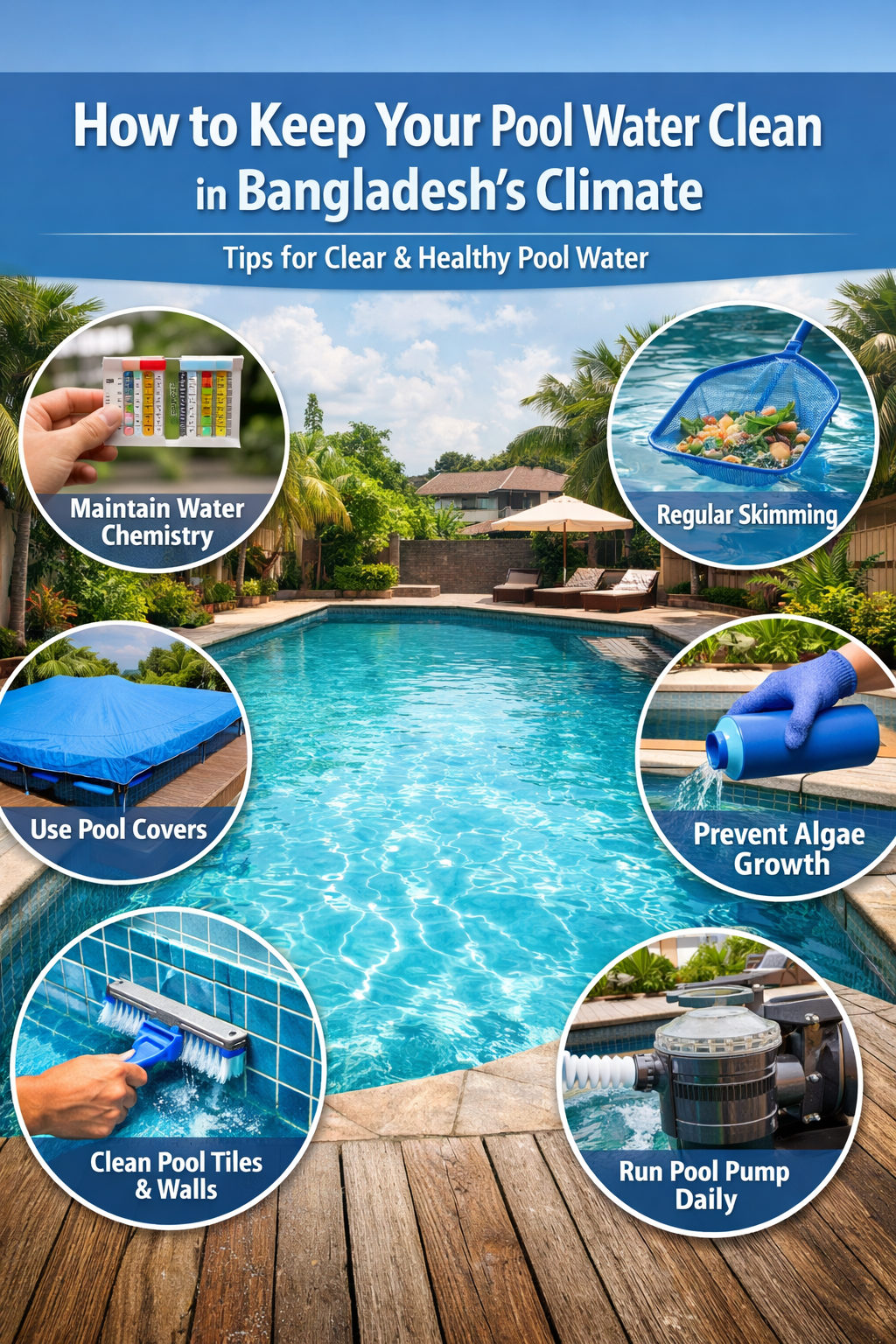
How to Keep Your Pool Water Clean in Bangladesh’s Climate
Maintaining a clean pool is crucial to ensuring not only a refreshing swim but also a safe and hygienic environment. In Bangladesh’s tropical climate, with its high humidity and heavy rainfall, pool owners face unique challenges. From the monsoon season to the dry, dusty months, keeping your pool water crystal clear can feel like a daunting task. But with the right approach, your pool can stay in top condition all year long. How to Keep Your Pool Water Clean in Bangladesh’s Climate
Let’s dive into the tips that will help you maintain clean pool water, no matter the season.
1. Choose the Right Pool Filter
A pool filter is the first line of defense against debris and dirt that make their way into your pool. In Bangladesh, with the frequent dust storms and heavy monsoon rains, a high-quality pool filter is a must.
Types of Filters:
- Sand Filters: Cost-effective and reliable for larger pools.
- Cartridge Filters: Ideal for smaller pools and provide finer filtration.
- DE (Diatomaceous Earth) Filters: Excellent for superior filtration, but a bit more expensive.
Invest in a high-efficiency filter suited to your pool’s size. Be sure to clean the filter regularly to ensure it’s working at its best. In the long run, a well-maintained filter prevents build-up of dirt, algae, and bacteria.
2. Regular Skimming to Remove Debris
With the monsoon season bringing plenty of leaves, twigs, and dirt into your pool, it’s important to skim your pool daily. If you’re located near trees or open areas, use a leaf net or skimmer to catch floating debris before it sinks to the bottom.
Not only does this prevent build-up, but it also reduces the strain on your filtration system. Regular skimming is especially important during the rainy season, when debris can clog your filters quickly.
3. Maintain Proper Water Chemistry
Keeping your pool water balanced is crucial to preventing the growth of algae and other harmful bacteria. The high humidity in Bangladesh can make your pool more susceptible to algae growth. Properly balanced water will not only help keep the water clear but will also protect your pool equipment from corrosion.
Here’s what you should monitor:
- pH Levels: Aim for a pH between 7.2 and 7.8. This ensures that the chlorine works effectively.
- Chlorine Levels: Chlorine is your best friend when it comes to keeping the water sanitized. The ideal chlorine level is between 1 and 3 ppm (parts per million).
- Alkalinity: This helps stabilize the pH levels. Aim for an alkalinity of 80–120 ppm.
- Calcium Hardness: Too much calcium can lead to scale buildup, while too little can corrode your pool surfaces. The ideal level is around 200–400 ppm.
You can buy pool test kits or have your water tested professionally to keep the levels in check. Balancing the water chemistry should be done weekly to avoid major issues.
4. Use Pool Covers
When not in use, covering your pool is a great way to prevent debris from falling in. A good quality pool cover also reduces water evaporation (important in hot weather) and can even retain the heat during colder nights.
Using a cover is especially recommended during the monsoon season, when the weather can be unpredictable, and debris is more likely to accumulate. Covers also help reduce the need for frequent cleaning.
5. Control Pool Algae Growth
In Bangladesh’s humid, tropical climate, algae growth can be a major problem, especially during the rainy season. The excess moisture in the air and the still water in your pool create a perfect breeding ground for algae. Algae can quickly turn your pool into a green nightmare if not treated.
How to Prevent Algae:
- Maintain a proper chlorine level (as mentioned earlier).
- Brush the pool walls regularly to remove any algae build-up.
- Use algaecides to treat your pool if algae begins to grow.
- Keep the pool water circulating, as stagnant water is a breeding ground for algae.
If algae starts to take over, it may require a shock treatment, where you add a higher concentration of chlorine to kill off the algae.
6. Use Pool Pumps to Circulate Water
Keeping your pool water moving is key to preventing stagnation, which is an invitation for algae and debris build-up. Use your pool pump to keep the water circulating, especially after heavy rain or when a lot of debris is present.
A good rule of thumb is to run your pump for 8–12 hours a day, depending on your pool’s size and the level of debris. During the monsoon season, you may need to run it for longer hours to clear out debris effectively.
7. Clean Pool Tiles and Walls Regularly
Dust, dirt, and even calcium deposits can accumulate on the tiles and walls of your pool, especially in Bangladesh’s hot climate. To keep your pool looking pristine, scrub the tiles and walls regularly to remove any build-up. You can use a pool brush with a long handle for this task, or hire a professional for a deeper clean if necessary.
8. Hire Professional Pool Cleaning Services
If you’re too busy or if maintaining the pool feels like an overwhelming task, it’s worth considering hiring professional pool cleaning services. Professionals can handle everything from chemical balancing to deep cleaning and will help keep your pool in top shape year-round. It’s a worthy investment, especially in Bangladesh’s hot and rainy climate. How to Keep Your Pool Water Clean in Bangladesh’s Climate
Final Thoughts
Taking care of your pool in Bangladesh’s tropical climate requires a bit of extra attention, but the effort is well worth it. With regular maintenance, proper water chemistry, and the right equipment, your pool can stay clean, safe, and inviting no matter what the weather throws your way.
By following these simple tips, you’ll enjoy crystal-clear water throughout the year and extend the life of your pool and equipment. Ready to dive in? Make sure to check your pool regularly, and don’t hesitate to reach out to QR Bangladesh Swimming Pool Store for expert help and advice. How to Keep Your Pool Water Clean in Bangladesh’s Climate