
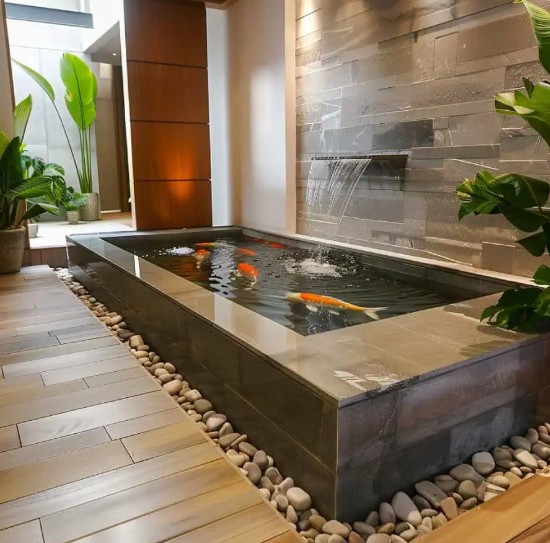
How to Make a Koi Pond in Bangladesh: A Complete Guide
Making a koi pond in Bangladesh is not just a construction project—it is a long-term responsibility. Koi fish are hardy, but they are sensitive to poor water quality, oxygen shortage, and unstable systems. Many koi ponds fail not because of bad fish, but because of improper planning and unsuitable design for local conditions. How to Make a Koi Pond in Bangladesh: A Complete Guide
This guide explains, step by step, how to make a koi pond in Bangladesh in a way that supports healthy koi, stable water, and manageable maintenance.
Step 1: Decide the Purpose and Size of Your Koi Pond
Before any digging begins, decide why you want a koi pond.
Ask yourself:
- Is it for decoration or serious koi keeping?
- How many koi do you plan to keep in the future?
- Will it be a focal point or a quiet garden feature?
In Bangladesh, a koi pond should ideally be deeper rather than wider. Deeper ponds stay cooler, hold oxygen better, and provide koi with a more stable environment during hot months.
Recommended depth:
At least 3.5–4 feet for long-term koi health.
Step 2: Choose the Right Location
Location is critical and often underestimated.
When choosing a spot:
- Avoid full-day direct sunlight
- Keep distance from large trees (leaf debris is a problem)
- Ensure easy access for maintenance
- Avoid areas where rainwater runoff can enter the pond
Too much sunlight increases algae growth, while falling leaves add unnecessary organic waste.
Step 3: Design the Pond Shape and Bottom Slope
A koi pond should not have a flat bottom.
Best practices:
- Gentle slope toward the bottom drain
- Rounded corners instead of sharp angles
- Smooth surfaces to prevent fish injury
A sloped bottom allows waste to move toward the drain naturally, reducing manual cleaning. How to Make a Koi Pond in Bangladesh: A Complete Guide
Step 4: Install Bottom Drain and Skimmer (Highly Recommended)
For koi ponds in Bangladesh, bottom drains are not optional if you want long-term success.
- Bottom drains remove heavy waste from the pond floor
- Skimmers collect leaves and floating debris
- Both reduce workload and improve water quality
Skipping this step often leads to dirty water and frequent cleaning problems.
Step 5: Set Up Proper Filtration System
Filtration is the heart of a koi pond.
A complete system includes:
- Mechanical filtration (removes solid waste)
- Biological filtration (breaks down harmful toxins)
- Enough capacity for warm water conditions
In Bangladesh, filters should always be slightly oversized to handle higher biological activity caused by warm temperatures.
Clear water does not always mean safe water—biological stability matters more.
Step 6: Select the Right Pump for Continuous Circulation
Koi ponds require 24/7 water circulation.
When choosing a pump:
- Ensure it is rated for continuous operation
- Match flow rate with filter capacity
- Choose energy-efficient models to reduce electricity cost
Avoid using pumps designed for intermittent use, as they fail quickly under constant operation.
Step 7: Ensure Proper Aeration and Oxygen Supply
Warm water holds less oxygen. This makes aeration extremely important in Bangladesh.
Essential aeration methods:
- Dedicated air pump
- Air diffusers or stones
- Aerated bottom drains if possible
Signs of poor oxygen levels include koi gasping at the surface or reduced movement.
Step 8: Control Algae and Water Clarity
Algae growth is common in warm climates.
Good control methods include:
- Balanced filtration
- Controlled feeding
- UV clarifiers for green water
UV systems help with water clarity but should always work alongside filtration, not replace it.
Step 9: Use Koi-Safe Water Treatment Only
Never use swimming pool chemicals in a koi pond.
Safe practices include:
- Dechlorinating tap water before adding
- Using beneficial bacteria products when needed
- Avoiding unnecessary chemical treatments
Koi ponds rely more on biological balance than chemical control.
Step 10: Plan for Regular Maintenance
A koi pond needs consistent care.
Typical maintenance includes:
- Checking water clarity and fish behavior
- Cleaning filters regularly
- Partial water changes
- Adjusting feeding based on season
Maintenance becomes easier when the pond is designed correctly from the beginning.
Common Mistakes to Avoid in Bangladesh
- Building shallow ponds
- Undersizing filters
- Skipping bottom drains
- Overstocking koi
- Overfeeding during hot weather
Avoiding these mistakes saves money and prevents fish loss.
Final Thoughts
Making a koi pond in Bangladesh is a rewarding experience when done correctly. The key lies in planning for the climate, prioritizing filtration and oxygen, and accepting that koi ponds are living systems, not decorative tanks.
A well-designed koi pond provides beauty, calmness, and healthy koi for many years with manageable effort.
Phone: 01743750555 | 01857888897
Email: qrbsps@gmail.com
Website: qrbangladeshswimmingpoolstore.com